
On July 6, as part of the INNOPROM-2026 International Industrial Exhibition in Yekaterinburg, a session was held on the transition to serial production of rockets and satellites.
The exhibition brought together leading industrial and technology companies, government representatives, and the international business community. Beyond the space industry, the focus was on robotics and production automation, artificial intelligence, new materials, industrial infrastructure, and international cooperation. Issues of technological sovereignty, attracting investment, and improving the competitiveness of Russian enterprises took a special place in the business program.
One of the key topics of discussion in the space industry was creating the technological and organizational conditions for producing more than 500 satellites and 50 rockets a year. Participants considered the introduction of assembly lines, the unification and modularity of space platforms, and the development of cooperation between state corporations and private business.
Among the industry's other key tasks are import substitution of critical electronic components and technological equipment, modernization of production capacity, attracting private investment, and training engineering personnel.
Serial production is a necessary condition for scaling up Russian space activity. This requires not only new technologies but also effective cooperation among market participants, allowing them to combine competencies and speed up the development of advanced solutions. International cooperation can also play an important role in the development of the industry.
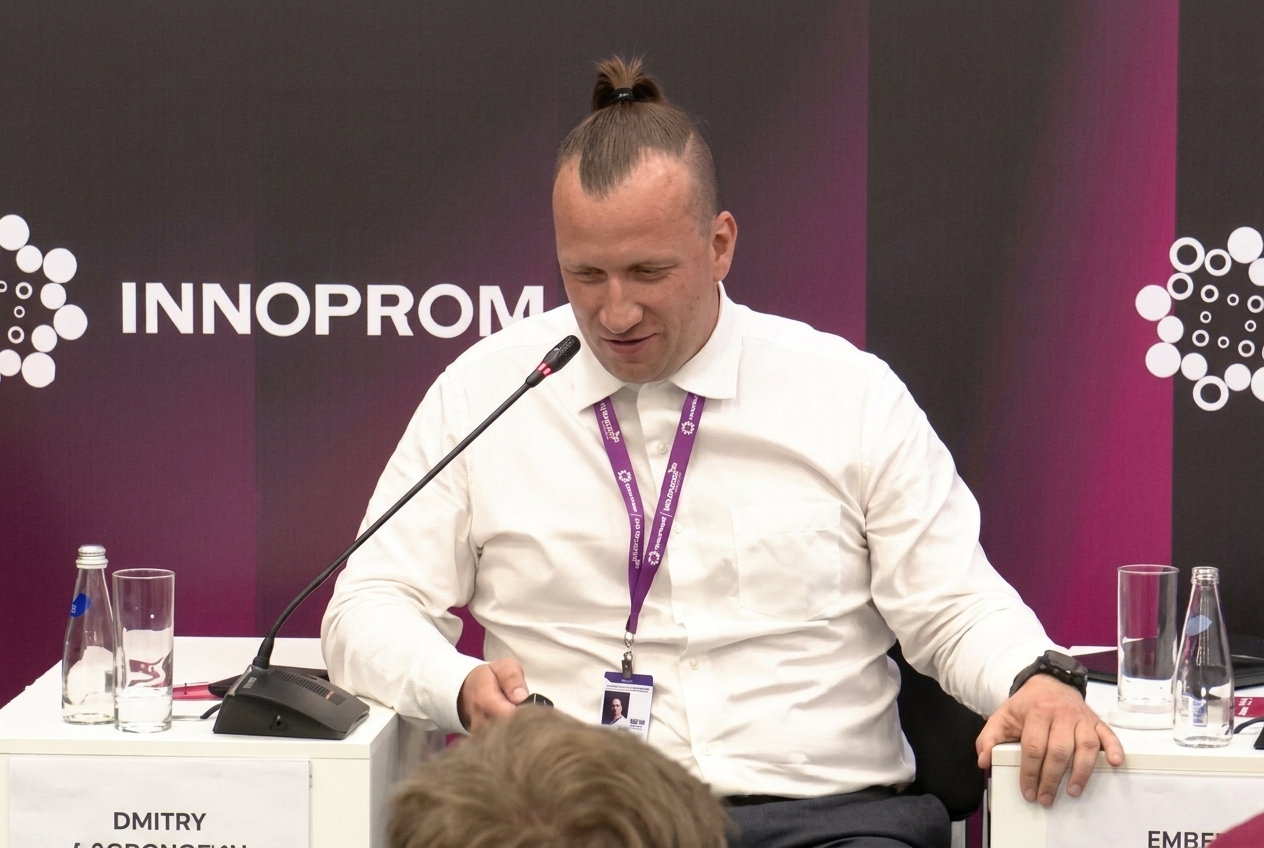
L5 is contributing to the development of private space activity. Next year we plan to expand our orbital constellation by adding three spacecraft to our first operational satellite. In parallel, we are exploring new applications of space technologies, including creating an aerial infrastructure for remotely piloted aircraft and developing direct satellite communication with smartphones.
Participation in INNOPROM was an opportunity to exchange experience with industry representatives, discuss current challenges, and get to know promising projects. Events like this help build business ties, form new partnerships, and find the solutions needed to scale up the space industry.
Space exploration remains one of the most complex and capital-intensive technological fields, but its importance for the future is hard to overstate. Combining the efforts of the state, private business, and the scientific and educational community will make it possible to overcome existing barriers and take the national space industry to a new level.